
Table of Contents
In short: An input list tells a venue’s sound crew every sound source on stage and exactly which microphone or DI each one needs; a stage plan shows where each of those sources physically sits. Together, they let an audio crew who has never met you set up the show correctly without guesswork. Ask an audio professional to assist you in creating both the stage plan and the input list.
A brief guide to the essential elements of both.
What is an Input List?
An input list is a document that lists every single sound source from the stage that needs to be connected to the main sound system (also known as the Public Address or PA system). Its primary purpose is to allow the club or festival’s audio crew to plan their work efficiently. It tells them exactly what microphones and cables they need to prepare for your set.
Key Components of a Professional Input List
A professional input list is organized into a clear table. Here’s a basic example showing the essential information the crew needs.
| Channel | Instrument/Source | Mic/DI Required | Notes |
| 1 | Kick Drum | SM91/SM52 | |
| 2 | Snare Top | SM57 | |
| 3 | Snare Bottom | SM57 | DRUMMER IS LEFT HANDED! |
| 4 | Hi Hat | C451/KM84 | |
| … | … | … | … |
| 11 | Bass DI | DI | |
| 12 | Guitar SL | MD409/SM57 | Monitor Mix 2, Downstage Left |
The input list above will make sense to any audio engineer on stage. Just in case, this is what each column means:
- Channel: This is the unique number the sound engineer assigns to each sound on their mixing console.
- Instrument/Source: This describes what is making the sound (e.g., Kick Drum, Lead Vocal, Bass Guitar).
- Mic/DI Required: This specifies the type of microphone or Direct Input (DI) box needed to capture the sound. Be specific if you have a preference.
- Notes: This is where you put critical information that affects the setup, like a left-handed drummer, a specific monitor mix request, or any other vital detail the crew must know in advance.
The Golden Rules for Your Input List
To avoid chaos during the changeover, your input list must be flawless.
1. It Must Be 100% Accurate: The most common cause of wasted time during a club show or festival changeover is an audio crew working from an out-of-date input list. Ensure the document you send reflects your current, exact stage setup.
2. Use Version Numbers and Expiry Dates: This is an industry-standard practice. Labeling your document (e.g., “Version 1.02, Expires 30th June 2026”) helps ensure the festival crew is working from the correct version and prevents them from using an old one they might have on file.
3. Hire a Professional: Audio engineers have their own language and conventions. They are used to working from input list documents that are fit-for-purpose. Please do not try to create an input list if you don’t know what you are doing. Find an experienced live sound engineer and pay them to create it for you. This is a crucial investment in a successful performance.
The input list tells the crew what you have; the stage plan tells them where it goes.
The Stage Plan
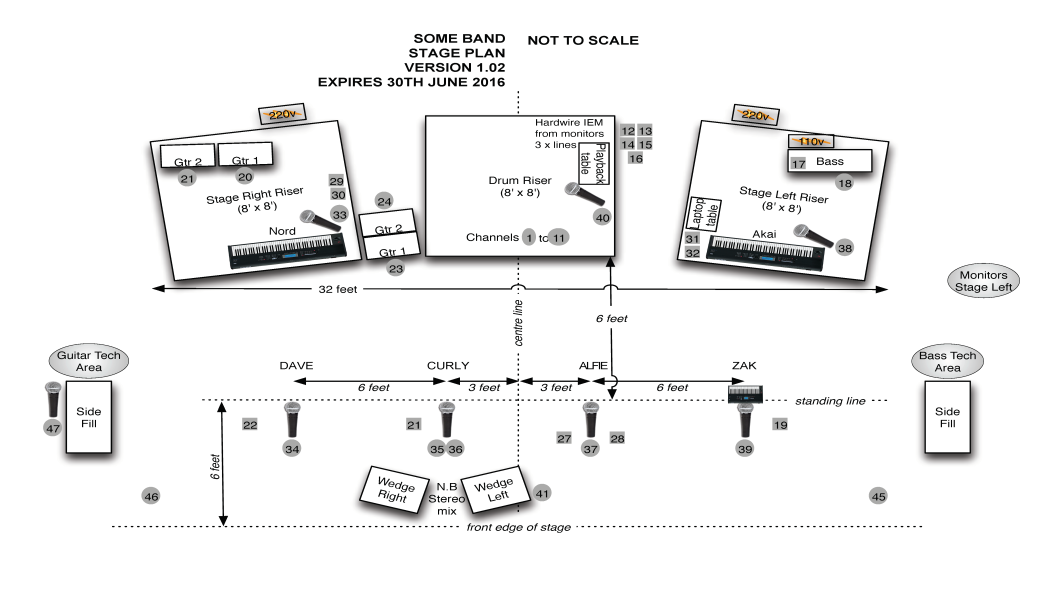
A stage plan (or stage plot) is a simple diagram that shows the club or festival crew where every instrument, amplifier, and sound source is physically located on the stage. For most new artists, a detailed architectural drawing isn’t necessary. A simple plan that clearly indicates the relative position of your gear will do the job perfectly.
Why the Crew Needs Your Stage Plan
The stage crew relies on your stage plan to prepare the stage for your arrival. They use it to pre-position key equipment, which is essential for a fast changeover. Specifically, they use it for:
- Positioning Monitor Wedges: So each musician can hear themselves and the rest of the band.
- Placing Power Drops: To ensure equipment that needs electricity (keyboards, pedalboards, laptops) gets power in the right spot.
- Positioning Rolling Risers: To know where to wheel pre-built sections of your setup, like the drum kit, during the changeover.
Avoiding Onstage Chaos
Just like with the input list, an out-of-date stage plan will cause problems. If your plan is wrong, your equipment will be in the wrong place, power won’t be where you need it, and your monitors will be set for a different lineup. This creates delays that eat into your set time. Always use version numbers and expiry dates on your stage plan to ensure the crew has the correct information. One of the biggest reasons for an accurate stage plan is to coordinate the use of rolling risers.
I am a concert tour manager. I can take care of all this for you, saving you time and (probably) money. Please contact me here is you feel I can help.